
Stigma surrounding mental illness persists because the person suffering is often blamed for experiencing symptoms outside of their control.
Depression in Translation aims to visually represent the epigenetic and environmental factors that contribute to someone’s predisposition to depression and suicide such as early life adversity, and how these traumatic experiences epigenetically regulate how genes are transcribed and translated. Thereby, the work will illustrate the complex web of factors that lead to, and make up the nuanced etiology of depression and risk of suicide.
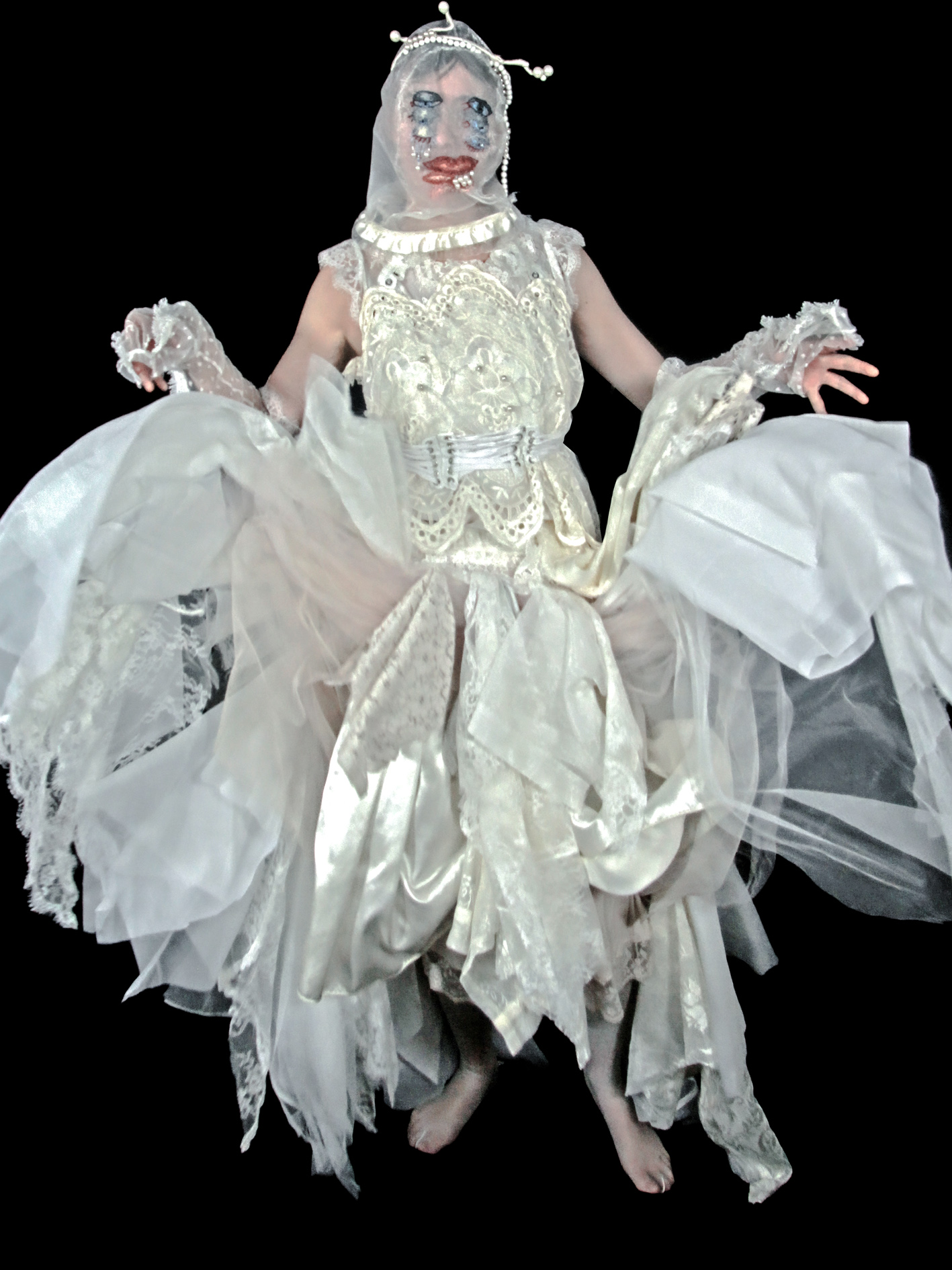
The dress that is revealed beneath the coat as well as the duality in the facial expression of the mask shows the contrast between depression and resilience outcomes in people with the same risk genes but different experiences with early life adversity and epigenetic regulation.
A simple beaded headpiece was constructed to represent dopamine downregulation in depression, as the branches reflect the dopamine side groups, and the dangling pearl section a degradation of the benzene structure. Other elements, such as the addition of embroidery and video effects, portray factors like the neurotransmitters involved in depression, and the distortions to stress regulatory systems due to early life diversity.
Video animations were also created to enhance this feeling of cyclical duality through the use of layering, repetition and contrast. Thus each element of the piece is considered in relation to how the depressive and resilient genes affect the person experiencing depression.
Based on research by Amanda Brown
Outfit concept and jacket: Indigo Danielson
Model, dress reconstruction and mask: Amanda Brown
Directed by, special effects and sound design: Emery Vanderburgh
This project is now under further development thanks to support from the Canada Council for the Arts.

 Emery Vanderburgh